Spain
within the AI Matters project
The Spanish Node is coordinated by the Research and Innovation Center TECNALIA. TECNALIA is part of the Node together with AIMEN -Technological Center-, ITA -Technological Institute of Aragon- as well as AFM -Spanish Association of Machine Tool Manufacturers and advanced and digital manufacturing cluster-, which represents the interests of the industry.
The Spanish Node envisions the creation of state-of-the-art test and experimentation facilities, based on AI solutions for the manufacturing sector, to help companies and technology providers to:
Evolve your manufacturing processes through a new paradigm of automated, digitized and flexible production supported by state-of-the-art AI solutions.
Apply these solutions to new emerging processes in a circular economy (efficient use of resources, eco-design and energy efficient products, efficient processes, design for circularity, disassembly, remanufacturing, recycling, etc.) that will play a key role in the future. manufacturing industries and in society in general.

5
years of project duration
24
partners
8
countries
7 nodes + 1.60 M€ budget
30M€
of EU funding
Node members

Tecnalia: coordinator
TECNALIA is the largest technology and research center in Spain and the country's benchmark in manufacturing innovation. TECNALIA is an applied and multidisciplinary center with a multi-technological approach, to give industrial sense to the digital innovations integrated in the new systems, materials and technologies that Smart Manufacturing brings us.

AFM: member INVEMA: affiliated entity
AFM, the Spanish National Association of Machine Manufacturers, is the advanced and digital manufacturing cluster that represents the industry's interests and offerings.
INVEMA, the Machine Tool Research Foundation and technological unit of AFM, has industrial engineers specialized in advanced manufacturing technologies.
AIMEN: member

ITA: member
The Instituto Tecnológico de Aragón - ITA is a Research and Technology Center linked to the Regional Government of Aragón. It has extensive experience and offers test facilities for digital technologies, materials, robotics and mechatronics.
Node members
Fraunhofer IPA
- Leading the German node
- Part of Fraunhofer organisation
- Fraunhofer is biggest applied research organisation in Germany
- Fraunhofer IPA focusses on manufacturing and automation
Lead contact
Dr. Björn Kahl
bjoern.kahl@ipa.fraunhofer.de
Institute of Electrical Energy Conversion (IEW)
- Part of University of Stuttgart
- Research focus on electrical machines and contactless energy transfer
- Applications in the areas mobility, medical technology and industrial applications
Lead contact
Urs Pecha
urs.pecha@iew.uni-stuttgart.de urs.pecha@iew.uni-stuttgart.de
Research Campus ARENA2036
- Research campus with over 50 partners from industry and science on one platform
- Focused on research in production and mobility
- Establishing services with robotic infrastructure for AI applications
Lead contact
Frederik Wulle frederik.wulle@arena2036.de
Physikalisch-Technische Bundesanstalt (PTB)
- National metrology institute
- Founded 1887
- Today: 3 sites, staff: ≈ 2000
- Agency of Federal Ministry for Economic Affairs and Climate Action
- Division Precision Engineering focus: manufacturing metrology
- Virtual instruments (dig. twin), Testing of algorithms for CMM
Lead contact
Dr. Harald Bosse harald.bosse@ptb.de
Strategic equipment of the node
Main equipment
- Data capture and analysis laboratories.
- AI and robotics test benches for smooth and flexible production.
- Robotic development platforms.
- Additive manufacturing fab-labs (e.g. binder jetting with industrial capacity -single pieces of equipment-).
- High performance computing and advanced simulation packages.
- Advanced composite cells.Perception and artificial vision laboratories and systems.
- Power electronics and systems laboratory.
Featured Services
AIMEN
Proof‑of‑concept testing for technology providers
Support for the development and validation of AI‑based hardware and software solutions aimed at different manufacturing domains.
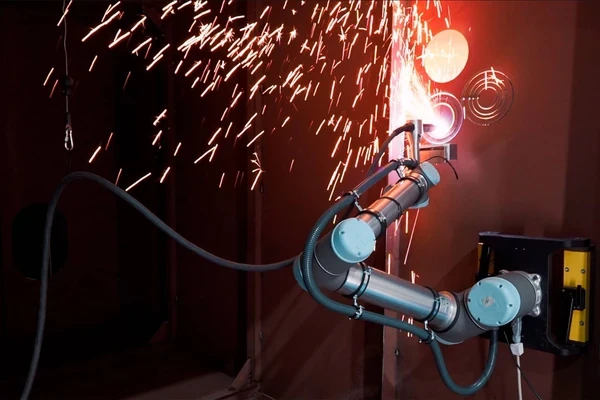
AIMEN offers integration and testing in semi‑industrial environments to assess interoperability, connectivity, and compatibility, replicating real production tasks and conditions.
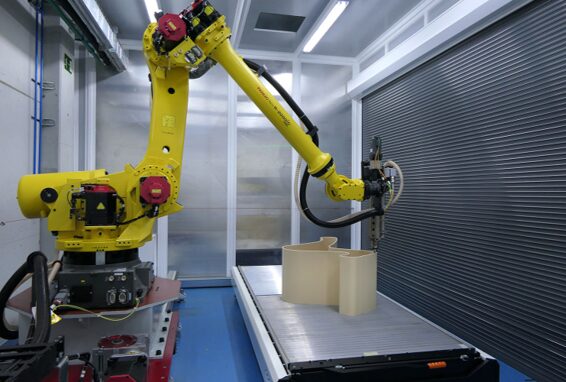
To enable this, AIMEN provides access to its pilot plants and specialized laboratories, covering advanced manufacturing technologies such as robotic additive manufacturing, the use of mobile and industrial robots (including exoskeletons), laser texturing and microfabrication, advanced joining technologies, machine vision systems, as well as digital platforms and cybersecurity.
AIMEN
On‑site experimentation for manufacturing technology adopters
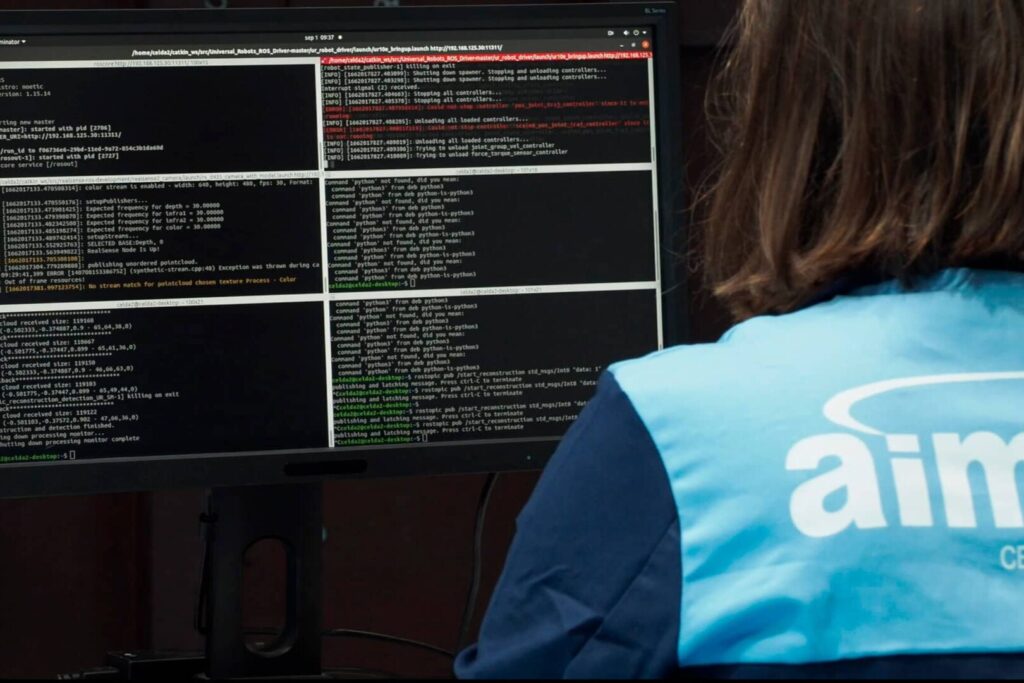
This service enables end users to assess how innovative AI‑based technologies behave when integrated into their own processes, evaluating reliability, performance, and robustness under production‑representative conditions.
Through short production runs, prototyping, and functional testing carried out at their facilities, AIMEN recreates real‑world scenarios that help anticipate deployment issues, optimize parameters, and reduce risks before full‑scale adoption.
AIMEN
Industrial data generation, interoperability, and high‑performance computing
AIMEN provides reliable, high‑value industrial data through three complementary pathways:
the generation of new data via experimentation in real manufacturing environments; the enrichment of datasets with synthetic data using generative AI; and the provision of already curated datasets, ready for training, validation, and testing of models.
In addition, the deployment of digital pipelines based on open standards ensures interoperability between assets, data integrity, and IT/OT convergence, facilitating the integration of information from different manufacturing domains.
The service is complemented by access to high‑performance computing (HPC) resources to run computationally intensive algorithms and deploy digital solutions in virtual scenarios, including cybersecurity solutions, distributed approaches, DPP, and more.
ITA
Anomaly detection and predictive algorithms
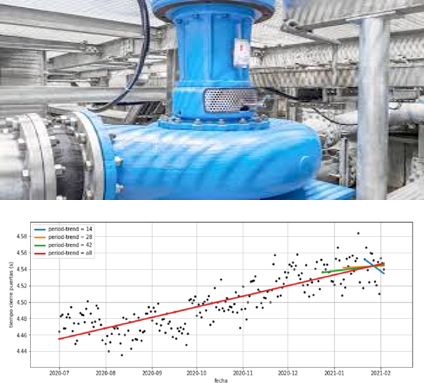
Analysis of the performance of different anomaly‑detection solutions and predictive models applied to industrial processes and predictive maintenance.
The study compares various approaches in real use cases, assessing their effectiveness, reliability, and forecasting capability. Based on this analysis, alternatives or improvements are proposed to strengthen the performance of the initial solution and maximise its value in specific operational environments.
ITA
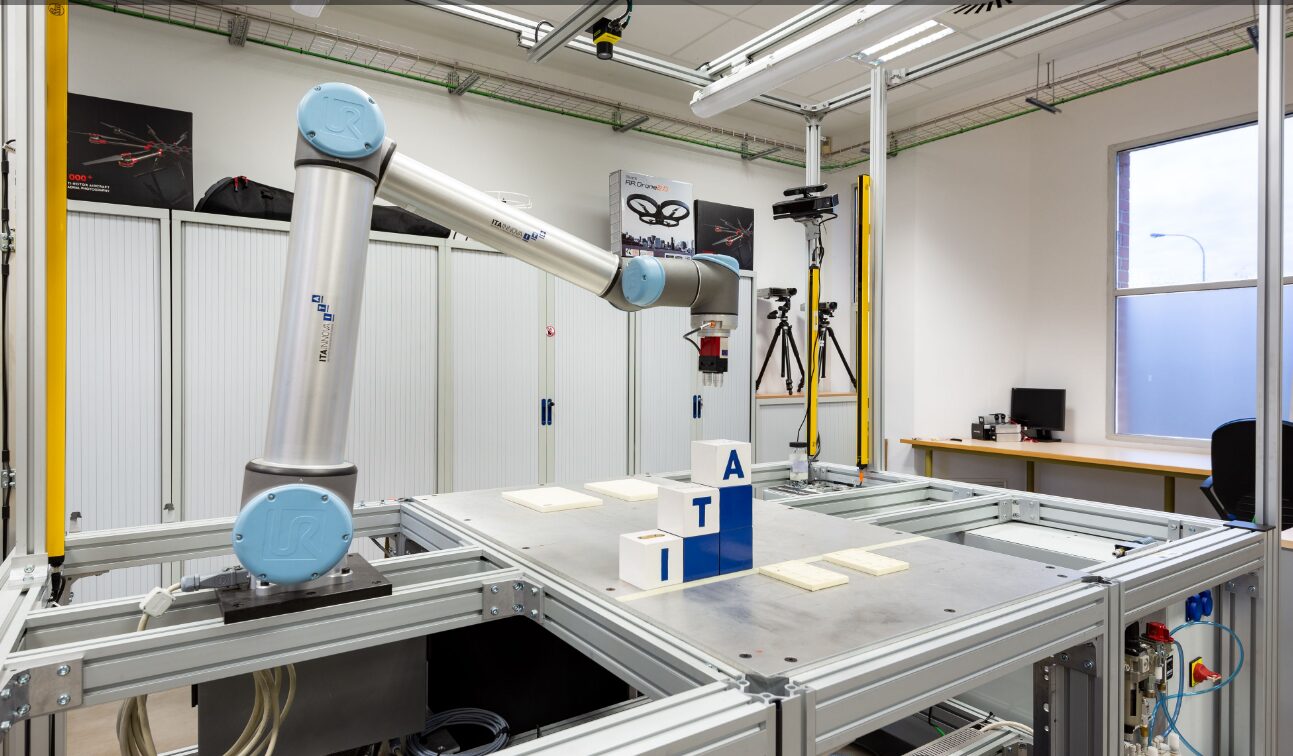
Object identification for robotic processes
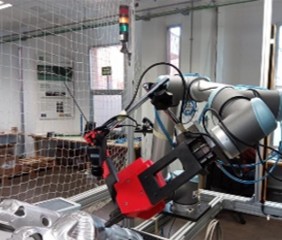
Comparative analysis of the performance of advanced object‑recognition algorithms in robotic environments.
The outcome is a technical report that evaluates each solution using defined indicators of performance, accuracy, robustness, and efficiency. This assessment makes it possible to identify the most suitable alternative for the application, supporting informed technological decision‑making and minimising risks during the development and implementation of projects.
ITA
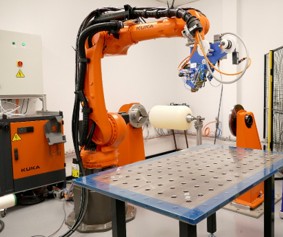
Quality inspection in composite manufacturing
The AFP cell enables the validation and optimisation of strategies under real operating conditions. The service includes a report detailing incidents, process analysis, and final part quality. In addition, datasets are generated to support the development and validation of defect‑detection solutions.
TECNALIA
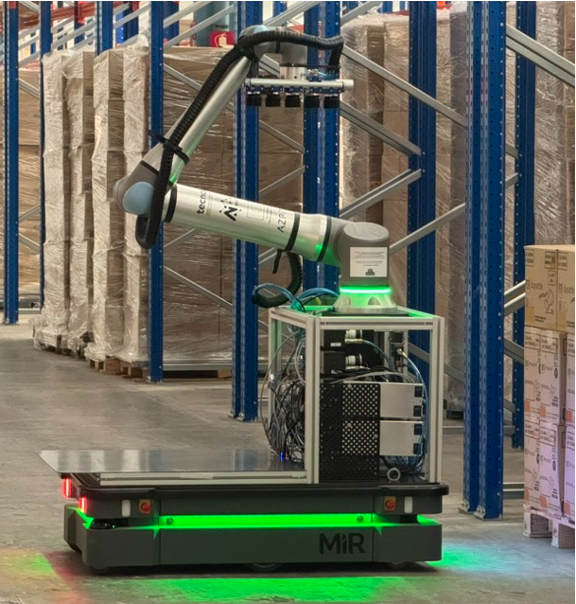
TrebezIA: Autonomous Robot for Intelligent Intralogistics
Advanced solution developed by experts in intelligent mobile robotics, designed to automate complex operations in intralogistics environments.
It combines AI, advanced perception, autonomous navigation, and manipulation capabilities to operate safely in dynamic spaces shared with people and other robots.
It automates key tasks such as order preparation, loading and unloading, improving agility and efficiency. The system operates autonomously in live environments and integrates seamlessly with the internal mobility ecosystem of warehouses and logistics centers.
TECNALIA
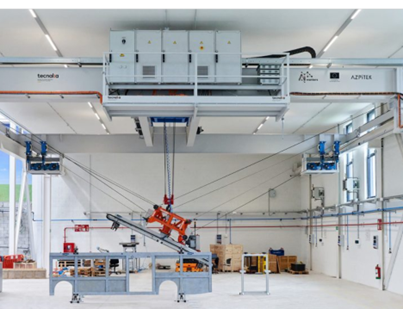
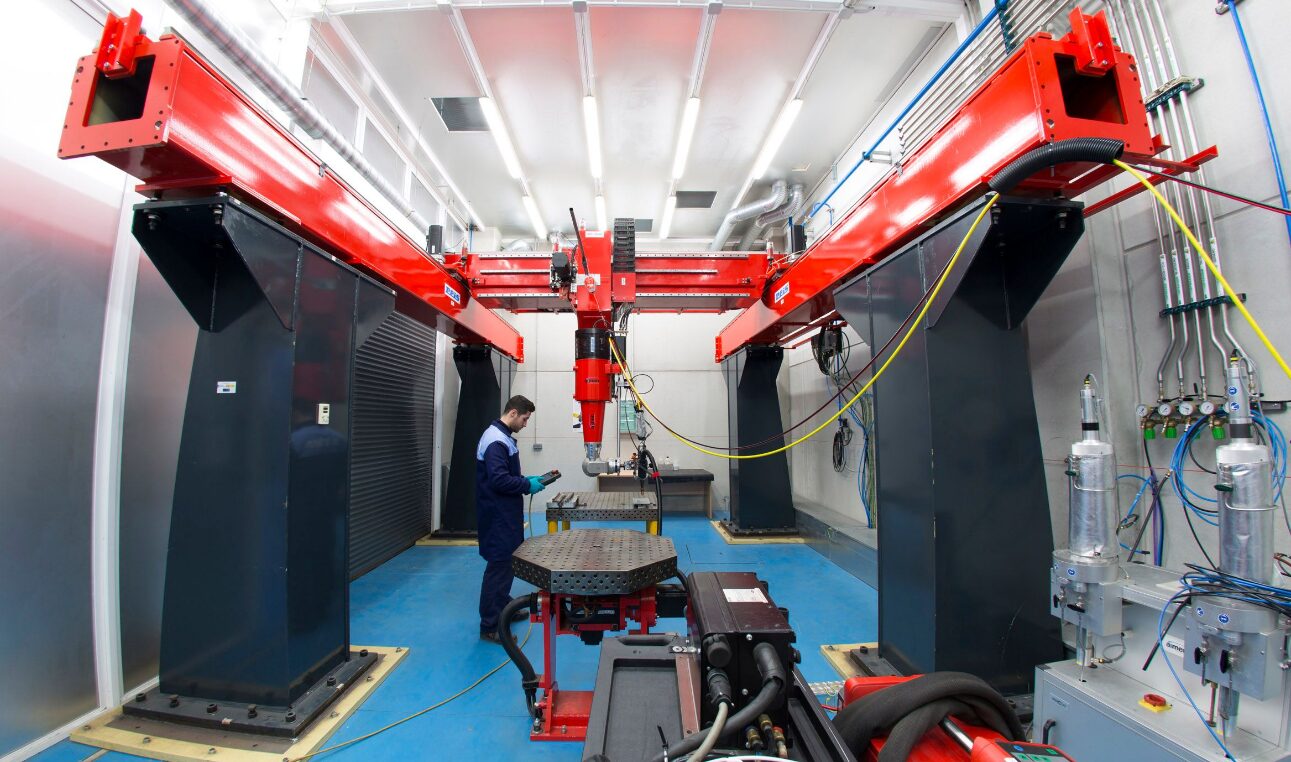
Cable‑Driven Robots for Advanced Manufacturing: Precision, Safety, and Scalability
TECNALIA’s cable‑driven robotic systems offer an advanced solution for handling heavy components in demanding industrial environments.
Designed for precision, safety, and flexibility, they enable operation without structural modifications. With payloads of up to 8 tonnes (synchronized with an overhead crane), 6 degrees of freedom, and 50% higher accuracy, they are ideal for fuselages, ship hulls, wind‑turbine components, and large panels.
The mobile platform integrates control, power, air supply, and communications. Its reconfigurable grippers —including a camera, rotary clamps, and brakes— allow safe handling of delicate components.
Operation can be fully automatic or manual through a mobile interface, featuring semi‑automatic alignment and complete control of the system.
TECNALIA
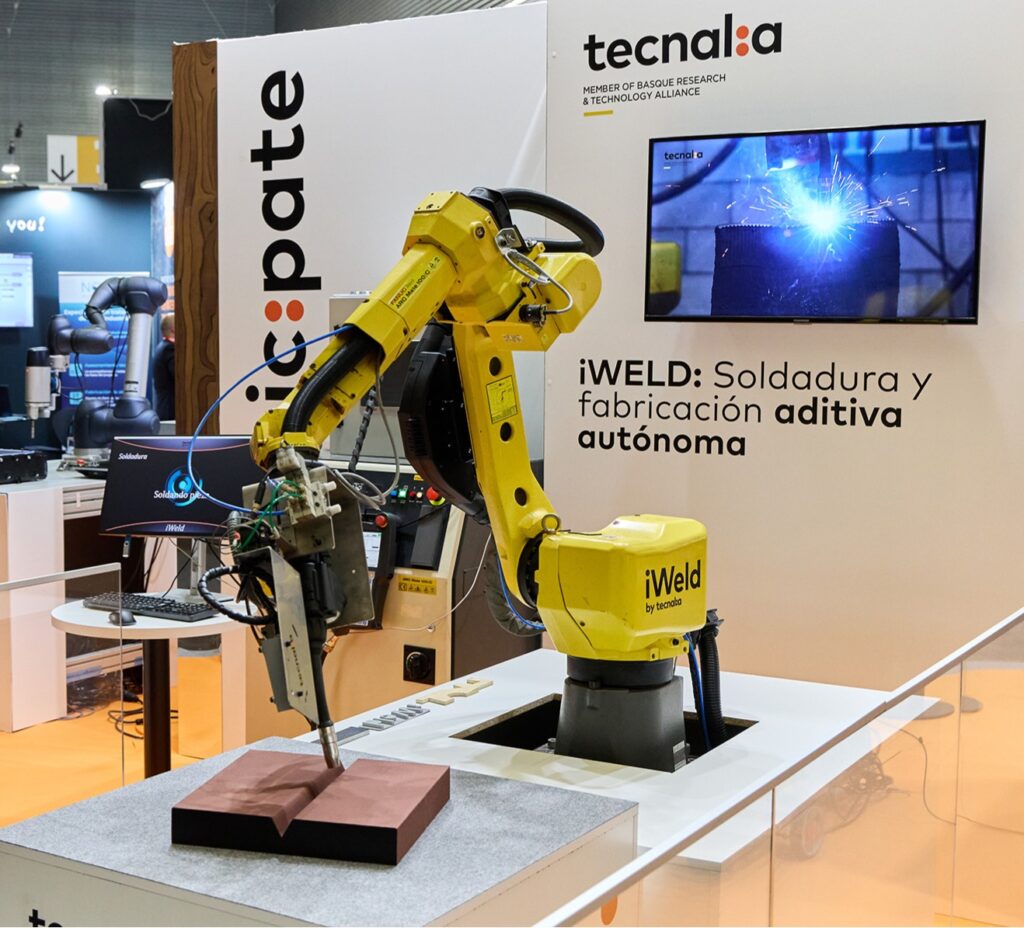
IWELD — Intelligent Welding and Autonomous Additive Manufacturing
iWeld is a solution developed by TECNALIA that integrates robotics, advanced monitoring, and intelligent software to automate welding processes (arc welding, laser, TIG, plasma) and metal additive manufacturing.
It enables autonomous execution of welding and material‑deposition operations with real‑time control and minimal human intervention, improving quality and productivity while reducing reliance on highly skilled personnel in demanding industrial sectors.
iWeld functions as an automated welding and additive manufacturing platform (DED‑ARC/WAAM) that can be adapted to industrial production lines.
The vision of the industry
Node services
1. Optimization at factory level
- Optimization of manufacturing processes and plant management systems.
- Implementation of hardware and software solutions in advanced manufacturing environments.
- Modeling and simulation for the development of software solutions and algorithms in virtual environments.
Human-robot interaction
- Autonomous, flexible and collaborative robotics.
- Support for the development and provision of high value-added data.
- Validation of AI algorithms for different manufacturing environments, both virtual and physical.
We test and experiment with AI-based solutions, deployed in physical and digital infrastructures in different sectors and areas of interest.
3. Circular economy
- Application of the circular economy to materials and products.
- Energy efficiency.
4. Other emerging and enabling technologies
- Benchmarking of off-the-shelf solutions.
- Regulation and testing of solutions in regulated environments (sandboxes).
- Material transformation processes, additive manufacturing and composite materials.
Our enabling technologies include: additive manufacturing laser systems, computer vision, perception systems, digital twins and distributed computing (HPC).
Illustrative node services
Optimization at factory level using ITA
- AI-based online quality control and tuning system.
- Detection of imperfections on the surface of the sheets during the stamping process.
- In-line quality control and adjustment system based on expert systems (machine learning, deep learning) and machine vision techniques, which can be integrated directly into the production line process.
This system takes into account the variability of the environment, such as lighting conditions and vibrations.
Expert systems or models based on learning techniques are one of the most important solution to overcome the inherent limitations of traditional inspection and quality control methods.
They combine machine learning from a human being (developed cognitive ability) with the speed and repeatability of an electronic system.

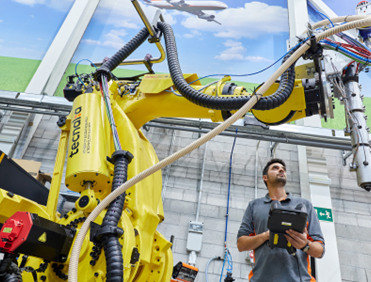
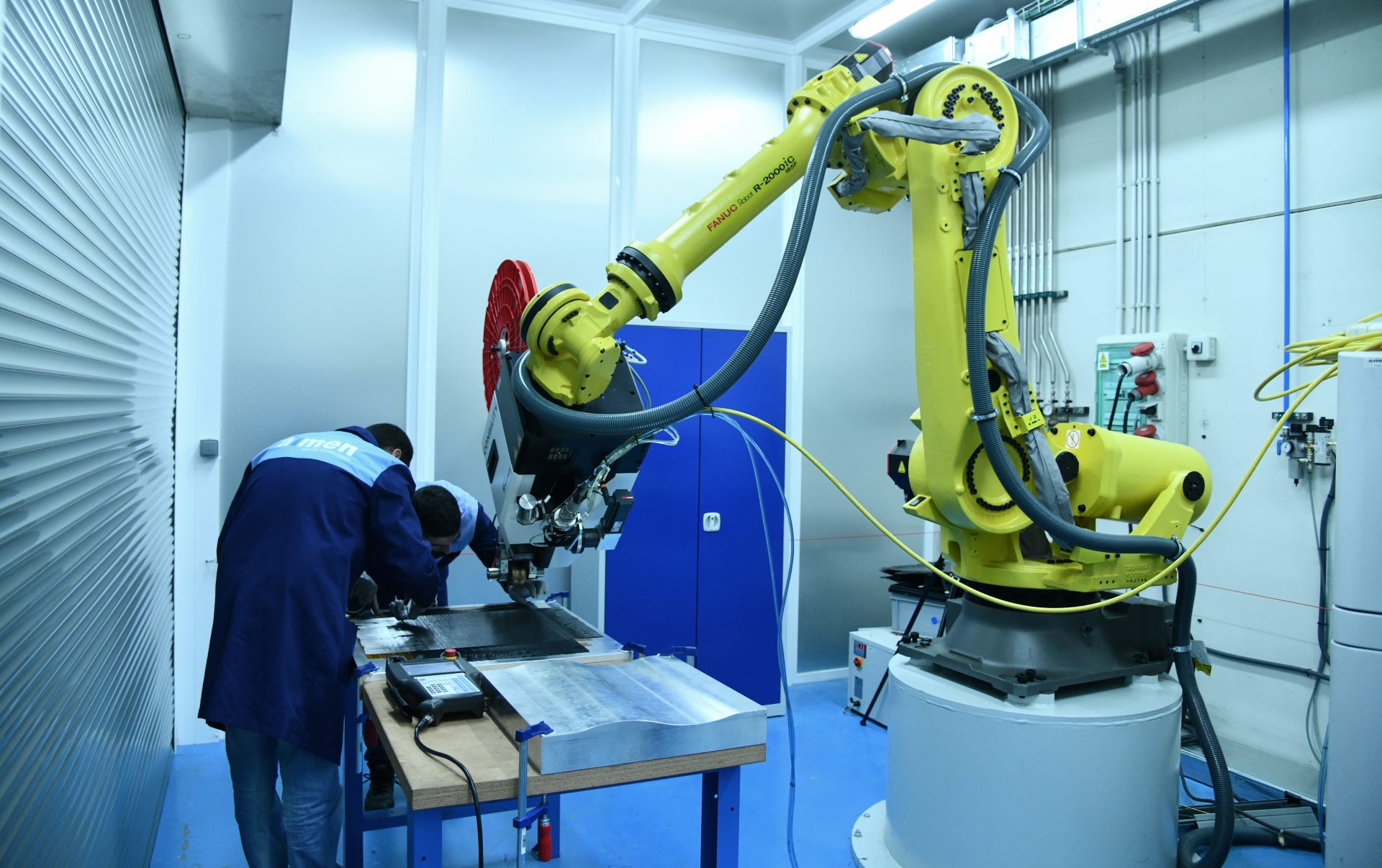
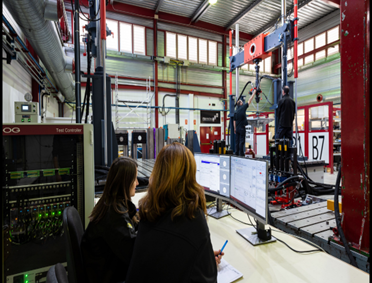
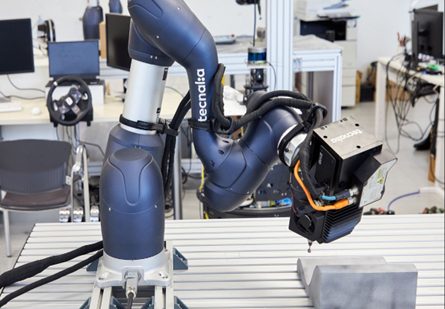
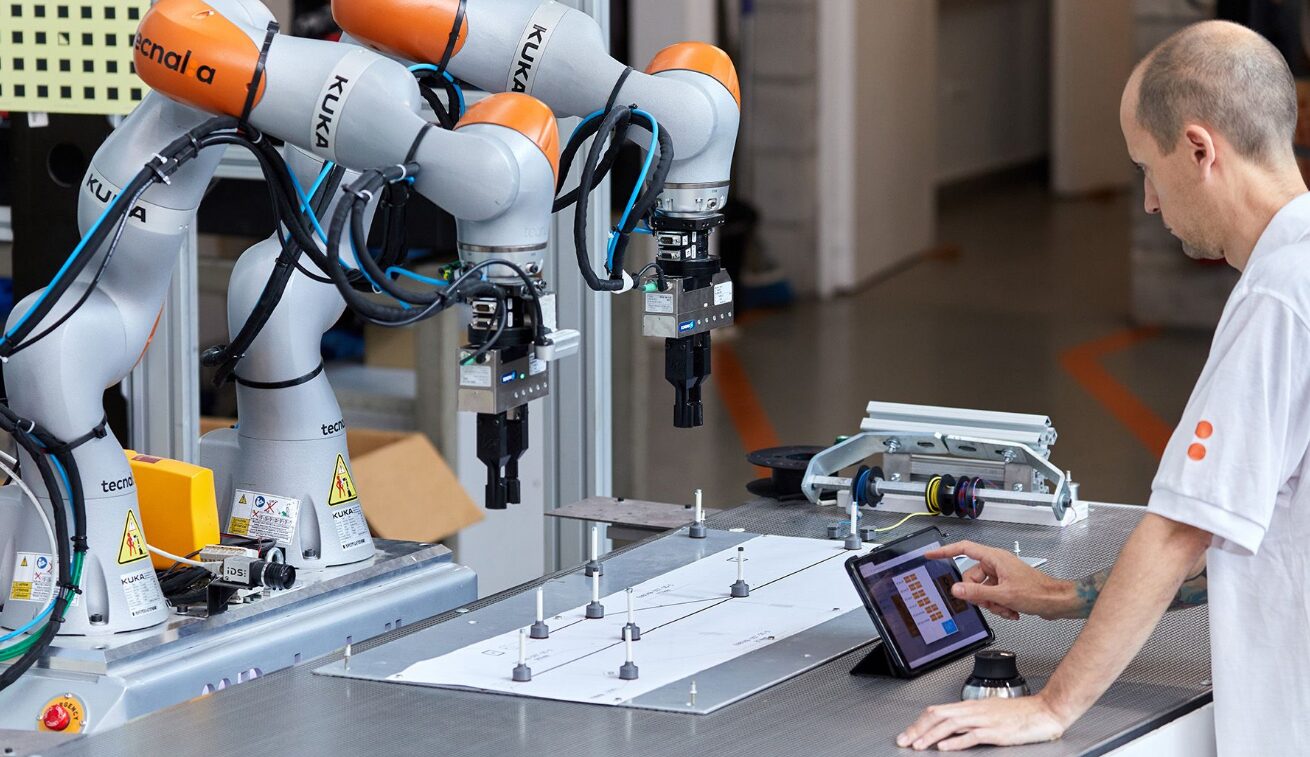
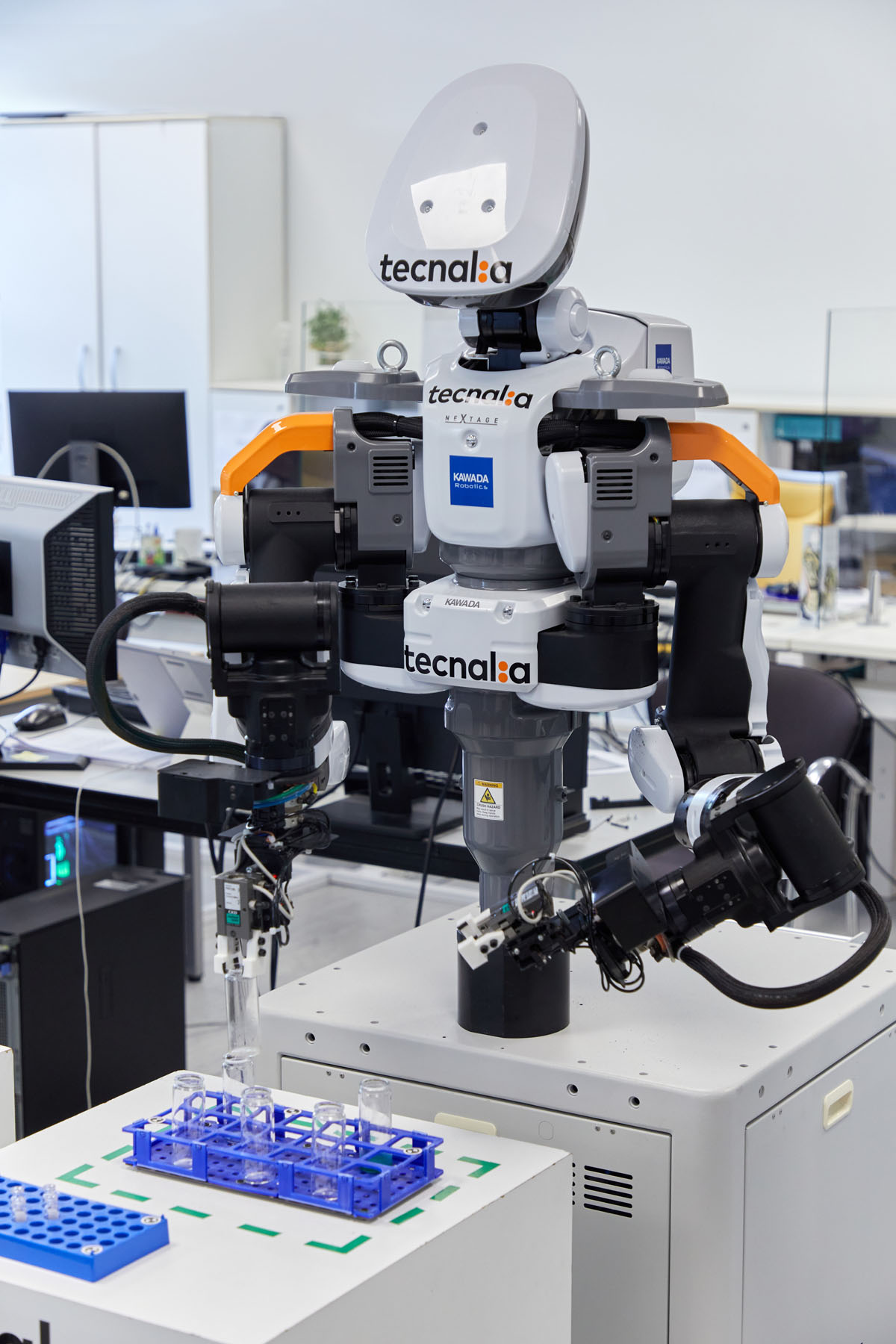
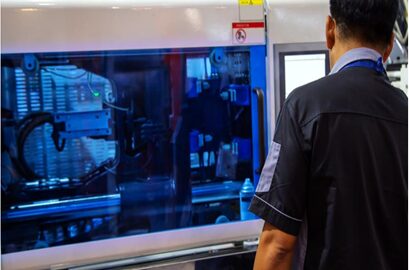
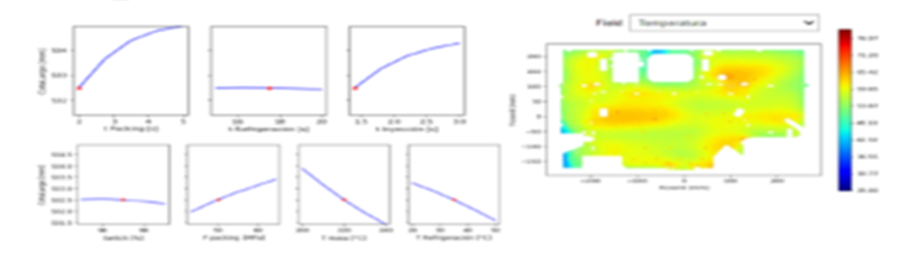
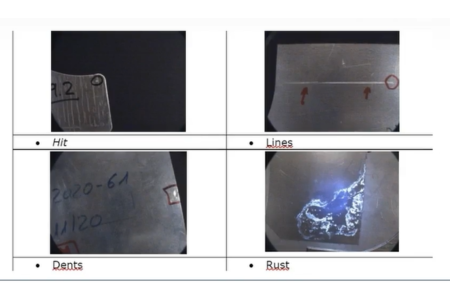
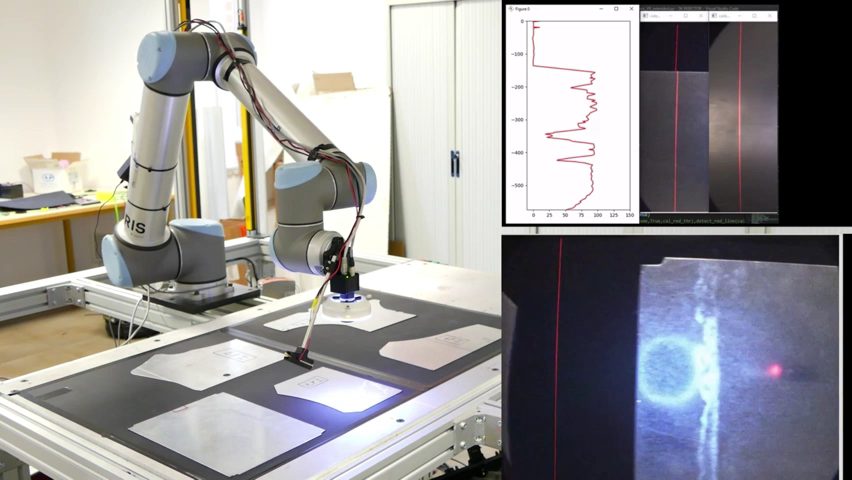
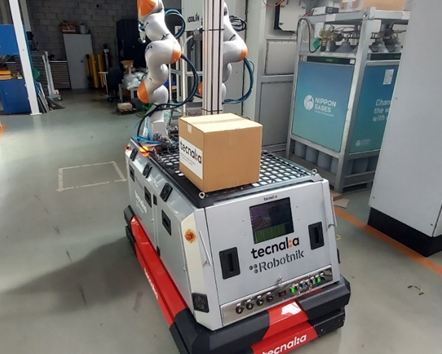
Robot-based services for the management of items that are currently excluded from automated systems in warehouses, either because of their volume, weight or diversity.

TECNALIA Collaborative Robotics
Logistics centers (e.g., in the pharmaceutical sector) automate 85% of product handling using traditional systems.
However, the remaining 15% of products are handled manually due to variability in case size and weight (high mix/low volume).
Currently, there is no solution on the market to address this situation without making costly investments to modify existing warehouses.
This is why MAIRON has emerged in response to this challenge.
It combines advanced technologies such as collaborative robotics, autonomous navigation, advanced perception systems, teleoperation and AI-based decision making to offer a robotic solution capable of handling packages up to 20 kg.
This enables fast and efficient installation and maintenance for the customer.
Experimentation services already in place.
First industrial projection
Events:
- Artificial Intelligence for a Competitive Industry, May 14, 2024, Santiago de Compostela.
- Main industrial projection, the 32nd BIEMH, Bilbao, June 24.
Other B2B with companies at events such as:
- Industria Conectada (Oct. 2-3) and Industry Days (Oct. 4-6) exhibitions in Malaga.
- 23rd CMH Manufacturing Congress (25-27 Oct.) San Sebastian.
- EBDVF 2023 Data and AI in Action: Sustainable Impact and Future Realities (25-27 Oct. Valencia)
- MANUFUTURE (coming November 23 and 24).